
Showing posts with label Science. Show all posts
Showing posts with label Science. Show all posts
Tuesday, August 09, 2016
Refocusing the full potential of science & technology for achieving sustainability goals |
Harnessing the full potential of science and technology to promote sustainable development requires that more researchers target a significant portion of their efforts on sustainability problems, and that those efforts become more effective in producing knowledge that is truly useful - and used - for achieving sustainability goals. Read More:

Friday, May 29, 2015
Closing in on the secrets of plant photosynthesis |

The new technique essentially has brought the picture into sharper focus. What the technicians see is a system in which "antenna" proteins capture light and feed them into a kind of molecular reactor. One difficulty with fully understanding the process is that, unlike the parts of a solar panel, which are rigid and designed to last, the crucial proteins in the photosystem of a plant are dynamic, and don't last very long before they fall apart. The plant then regenerates these structures. "Even though nature has had millions of years to develop and optimize photosynthesis, there are still outstanding and unknown questions about how photosynthesis operates. It's truly a scientific challenge."
Monday, November 17, 2014
Physics - The science of matter, energy and their interactions; is it in need of a revolution?
True physics of relativity and quantum mechanics don't get along well. The two ideas are also incredibly constraining, and they make it challenging for physicists to think outside the box and develop new ideas and theories, Arkani-Hamed said.
Read More |

Read More |

Friday, August 22, 2014
Solar fuels as generated by nature
"Synthetic solar fuels open up wide-ranging possibilities for renewable energy technologies, in particular for the transport and infrastructure sectors, which are still reliant on fossil fuels," says Professor Wolfgang Lubitz, Director at the Max Planck Institute for Chemical Energy Conversion. "An efficient light-driven, water splitting catalyst based on common metals such as manganese would represent huge progress here. The insight gained into nature's water splitting enzyme through this research has laid the foundations for such developments."
Read More:

Saturday, April 12, 2014
Dance To The End Of Time and Space
Bringing astrophysics to the masses is difficult at the best of times, but how do you communicate such complex science to students in underserved groups, such as those who are deaf or hard-of-hearing?
One research team has developed a unique approach by using dance and stunning backdrops to teach the mathematics and physics of the Universe.
 Read More:
Read More:
Wednesday, January 15, 2014
Making Obsolescence Obsolete
Physics may be esoteric in conception, but this charmingly illustrated video gets us through a few hundred years of scientific discovery.
BBC Science Club - Physics from Asa Lucander on Vimeo.
Monday, December 02, 2013
Let Science Set the Facts
When it comes to handheld computers, smart phones and other electronic devices people don’t ever seem to question science when underlying something easily valued. We either take it for granted or celebrate science-based products like G.P.S., Global Positioning Systems, which guide drivers and pilots and allow heavy machinery or a farmer’s tractor to be operated with a precision that approaches ballet. And people are always eager to take advantage of the latest advances in medicine.
Science seems to be only questioned when people dislike the implications of scientific results. Story continues:

Science seems to be only questioned when people dislike the implications of scientific results. Story continues:
Wednesday, October 30, 2013
The light-harvesting states of photosynthesis are highly efficient in many species, and happen extremely fast |
 Inspired by nature |
Through billions of years of evolution, life on Earth has found intricate solutions to many of the problems scientists are currently grappling with. Physicists at the University of Cambridge's Cavendish Laboratory are trying to unravel nature's secrets to develop new energy-generating technologies for a more sustainable future.
"The light-harvesting states of photosynthesis are highly efficient in many species, and happen extremely fast – within a nanosecond, if not picoseconds," said Chin. "We're very interested in that efficiency and how it's managed. Biology has evolved phenomenally subtle systems to funnel light energy around and channel it to the right places. It has also become incredibly good at building tiny devices that work with high efficiency, and at replicating them millions of times."
Read More:
Inspired by nature |
Through billions of years of evolution, life on Earth has found intricate solutions to many of the problems scientists are currently grappling with. Physicists at the University of Cambridge's Cavendish Laboratory are trying to unravel nature's secrets to develop new energy-generating technologies for a more sustainable future.
"The light-harvesting states of photosynthesis are highly efficient in many species, and happen extremely fast – within a nanosecond, if not picoseconds," said Chin. "We're very interested in that efficiency and how it's managed. Biology has evolved phenomenally subtle systems to funnel light energy around and channel it to the right places. It has also become incredibly good at building tiny devices that work with high efficiency, and at replicating them millions of times."
Read More:
Saturday, October 26, 2013
How algae may one day cure parkinson’s disease |
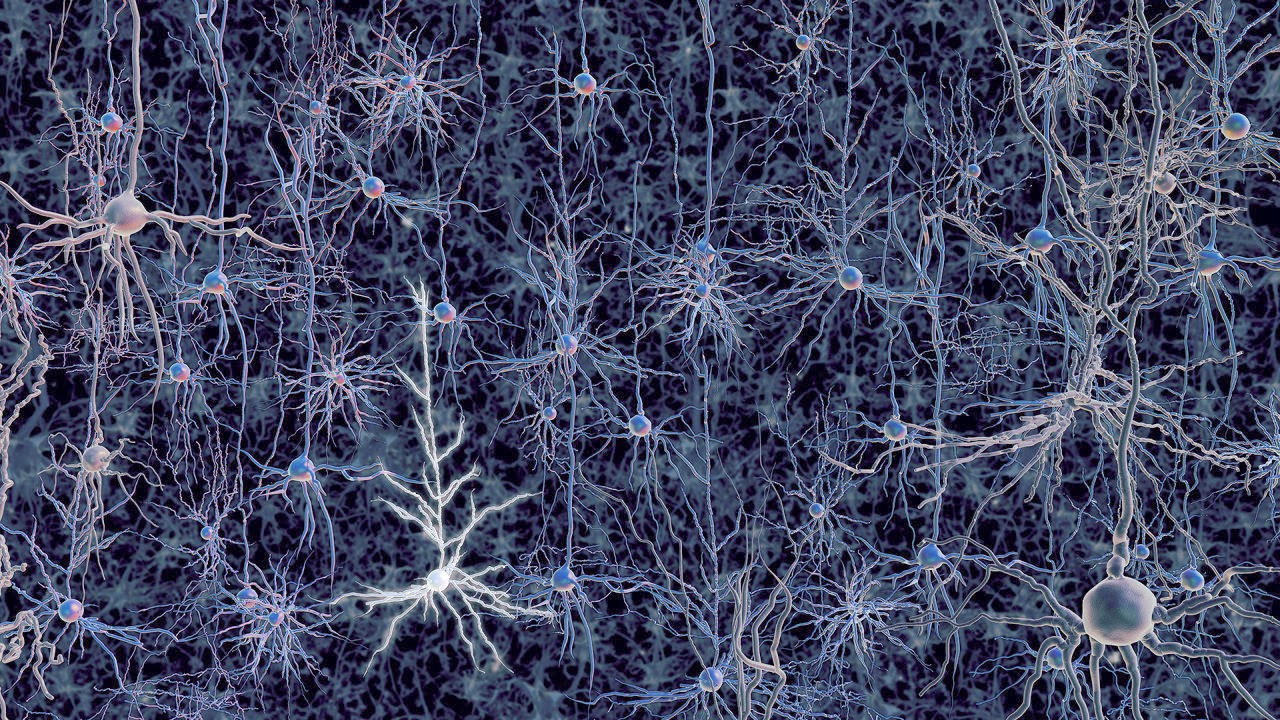
Ever see a green film form on a still pond? It happens because alga needs sunlight to complete the photosynthesis cycle, the process it uses to convert carbon dioxide and water into the sugar it "eats." It’s that drive to seek the light that makes Chlamydomonas reinhardtii, a single-celled alga, a brain research superstar and the core of optogenetics technology--which uses light-sensitive proteins to study how neurons employ electrochemical signals to produce memories, thoughts, and behaviors. It is helping scientists research brain diseases and disorders such as Parkinson's, schizophrenia, depression, stroke, PTSD, addiction, some forms of blindness, and more: Read More

Tuesday, August 27, 2013
Star birth unveiled |
All the stars we see in the sky were born in star birth nurseries — giant clouds of gas and dust. These nebulae aren’t the brightest things in the sky, and to see most of them you need binoculars or a telescope. But, they’re worth searching out because they show us what our own sun might have looked like as it was being born, around 4.5 billion years ago. Story continues
 polycyclic aromatic nitrogen heterocycles| Life's Building Blocks 'Abundant in Space'
Read More:
polycyclic aromatic nitrogen heterocycles| Life's Building Blocks 'Abundant in Space'
Read More:
polycyclic aromatic nitrogen heterocycles| Life's Building Blocks 'Abundant in Space'
Read More:
Wednesday, June 06, 2012
What we depend on to sustain our quality of life ..
ScienceDaily (June 6, 2012) — Keeping the Earth, our life support system, in terms of supporting humanity: Continue Reading:
Loss of biodiversity increasingly threatens human well-being [Research] Continues:
Yale study concludes public apathy over climate change unrelated to science literacy: Read More:
Loss of biodiversity increasingly threatens human well-being [Research] Continues:
Yale study concludes public apathy over climate change unrelated to science literacy: Read More:
How Tribalism Makes a Risky Word Even More Dangerous |
Our instinctive need for social cohesion easily overwhelms morality and reason.
This fact is often cited as evidence that tribal peoples saw only the members of
their own tribe as "people," and denigrated all others as something less. In fact,
this is a tenuous conclusion to draw from the evidence. Many languages refined
their identification as "the true people," or "the real people," dehumanizing the other
people or simply considering them inferior. The more driven we are to circle the wagons in
pursuit of the safety of social cohesion, the more we abandon reason, intellect
and evidence-based analysis, the more closed our minds become.
Continue Reading:
Our instinctive need for social cohesion easily overwhelms morality and reason.
This fact is often cited as evidence that tribal peoples saw only the members of
their own tribe as "people," and denigrated all others as something less. In fact,
this is a tenuous conclusion to draw from the evidence. Many languages refined
their identification as "the true people," or "the real people," dehumanizing the other
people or simply considering them inferior. The more driven we are to circle the wagons in
pursuit of the safety of social cohesion, the more we abandon reason, intellect
and evidence-based analysis, the more closed our minds become.
Continue Reading:
The Polarizing Impact of Science Literacy and Numeracy on Perceived Climate Change Risks|
Kahan’s paper reinforces several current bodies of research that try to understand human cognition more holistically. First, it supports Kahan’s own work on Cultural Cognition theory, which finds that though we employ facts as weapons in our battles over issues and ideas, the real war is about tribal identity and cohesion |
Continue Reading:
Jeff Schweitzer ~Scientist and former White House Senior Policy Analyst; Ph.D. in marine biology/neurophysiology
Why Facts Matter: Science Is Not an Opinion | Faith and Reason: We have come to this tragic conclusion about our future because fact and opinion today are considered of equal validity. But how did we arrive here? Why did this happen? How did two plus two equals four become liberal conjecture? Why do we dispute the obvious? Because our society has been infected with the deadly disease of faith-based reasoning.
Monday, July 19, 2010
"It's like magic. Porosity is a way to do a lot with very little,"
Scientists Create Improved CO2-Absorbing Crystals: "If we take a gram of MOF-200 and unravel it, it will cover many football fields, and that is the space you have for gases to assemble," says Omar Yaghi, team leader at UCLA's California NanoSystems Institute, improves upon an earlier crystal named MOF-177 to produce two new versions -- MOF-200 and MOF-210 -- that stores twice the volume of gases. Read more:
Wednesday, February 17, 2010
Subscribe to:
Posts (Atom)